

Graduate
Fellowship
X

Status: Open Now
Full Application deadline: Wednesday, 16th December
Notification date: Early February
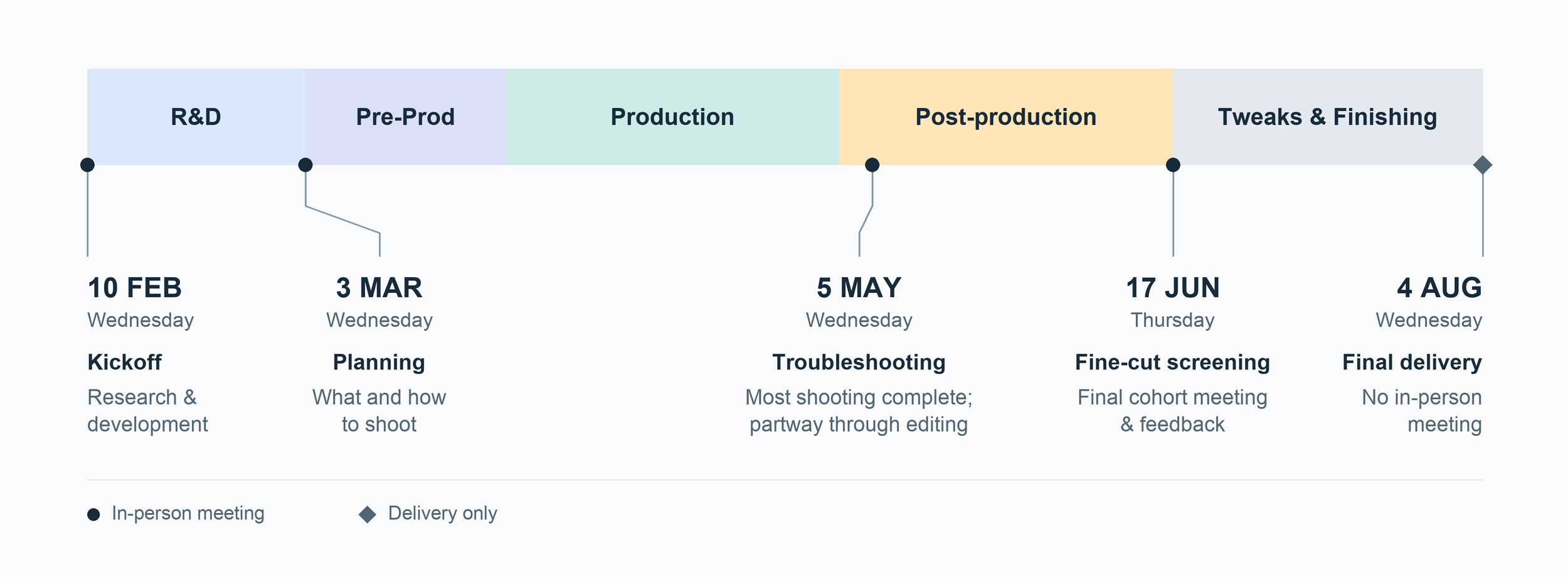
The fellowship is running from February to August 2027. During this period, you'll develop and make an 8-15 minute documentary.
Fellows will receive a £3,000 seed grant to help cover the costs of making their short doc, as well as travel stipends, industry mentoring and four hands-on workshop days in Leeds with industry professionals.
At the end of the fellowship, the filmmaker behind the best film will receive a £20,000 award towards their next production, as well as a colour grade and sound mix at Sticks & Glass, valued at £10,000).
About the FELLOWSHIP
The Graduate Fellowship supports emerging filmmakers to develop their creative practice and build a path into impact documentary filmmaking. Whether your experience is in fiction, factual or documentary storytelling, this is an opportunity to explore a new direction with funding, mentorship and a cohort of fellow filmmakers!
We're looking for talented emerging filmmakers who have graduated within the last 3 years from a university film course or film school who have completed at least one film or substantial original moving-image project. This fellowship will take a small cohort of 10 emerging filmmakers on a six-month journey to produce a short impact documentary film, along with creative development, in-person workshops and professional mentoring.
To apply, submit two short film ideas that you would be interested in developing during the fellowship. We're looking for ideas in the following areas:
Emerging Threats: Documentaries exploring the emerging threats, breakthroughs and decisions that could fundamentally reshape humanity's future.
Animals & Food Systems: Documentaries exploring the lives of animals, our relationships with them, and the complex food systems that shape our world.
We're looking for compelling stories with strong narratives at their heart. We want films that engage audiences through memorable characters, relationships and experiences, using storytelling to explore the themes we're interested in. The story should lead, rather than the issue itself.
We will prioritise bold, original and creatively ambitious approaches. We're particularly interested in unexpected perspectives, unconventional storytelling and ideas that bring something genuinely new to these subjects. We also welcome hopeful, uplifting and solution-oriented stories that inspire audiences and offer fresh perspectives on what's possible.
What to Send Us
To apply, we'll ask you to share:
Two documentary ideas: One exploring Emerging Threats and one exploring Animals & Food Systems. Tell us what makes each story compelling, who or what we might follow, and which idea excites you most.
Your story as a filmmaker: A short 2–3-minute video introducing yourself, your filmmaking experience and what draws you to the story you most want to tell.
We'll also ask you to think about who your film could reach, what you hope audiences might take away from it, and how the mentoring and development opportunities could support you.
Your creative vision: How might you bring your preferred idea to life on screen? We'd love to hear about your storytelling approach and creative influences.
A taste of your work: A link to a completed film or substantial original moving-image project that gives us a sense of your filmmaking voice.
We're not expecting fully developed projects or all the answers at this stage.
What happens if you’re selected?
You'll join a small cohort of 10 emerging filmmakers for a six-month fellowship combining creative development, in person workshops and professional mentoring.
The fellowship includes:
£3,000 production grant per filmmaker to help cover equipment hire, travel, filming and other production costs involved in making your short documentary.
A £20,000 grant will also be awarded to the winning film, alongside in-kind post-production support valued at £10,000 for the filmmaker’s next project, subject to confirmation.
Four in-person development days in Leeds, led by experienced film industry professionals.
Four remote mentor check-ins to support your project throughout production.
Creative and editorial guidance from concept development through filming and post-production.
Who are we?
Who Let The Docs Out is a filmmaker-led nonprofit organisation and impact fund backing non-fiction stories that tackle pressing global issues - from climate action and systems of consumption to animal-human coexistence and AI safety. Combining grant-making with industry mentorship, strategy, and distribution support, Who Let The Docs Out provides the critical infrastructure needed for urgent, high-impact stories to reach mainstream audiences and drive real-world change.
Sticks & Glass is a Leeds-based post-production facility and creative hub dedicated to nurturing emerging talent and providing industry-standard finish for high-impact media. Combining state-of-the-art picture and sound facilities with structured training initiatives, Sticks & Glass offers the technical infrastructure and hands-on guidance needed for early-career filmmakers to bridge the gap into professional production.
Frequently
Asked Questions
-
We welcome filmmakers who have graduated within the past three years from a film programme.
Applicants should be at an early stage of their filmmaking careers and have completed at least one film or substantial original moving-image project.
-
No. This is a fellowship for graduates from film courses who have graduated within the last 3 years.
-
No. We welcome filmmakers from fiction, factual, documentary and other moving-image backgrounds.
We're interested in your storytelling ability, creative perspective and potential to develop as a documentary filmmaker.
-
We recognise that filmmaking is collaborative and welcome applications from producer–director partnerships.
Each application should identify one lead filmmaker who will participate in the programme. The £2,500 production grant is awarded per selected project, rather than per team member.
-
The programme includes four in-person development days in Leeds, so applicants must be able to attend these sessions. We can provide a travel stipend for travel within the UK but unfortunately can’t cover expenses from outside of the UK.
Ideation
-
We're not expecting fully developed projects or completed research.
We're looking for compelling ideas with strong storytelling potential, interesting characters or contributors, and a clear connection to our themes.
You should be able to explain what makes your story interesting, why you want to tell it and how you might approach making the film.
The programme is designed to help you develop your ideas into finished documentaries.
-
Not necessarily. We understand that access can take time to secure and may develop further during the programme.
However, you should have identified your key contributors or filming locations and considered how you might gain access to them. Where your story depends on access to a particular person, community or location, we'd expect you to have made some initial enquiries or established whether access is likely to be possible.
We're looking for ideas that are ambitious but realistically achievable within the programme's timeframe and resources.
-
Yes, provided the project is still at an early enough stage to benefit meaningfully from the programme's development, production and mentoring opportunities.
The programme is intended to support the creation of new short documentaries, rather than the completion or distribution of films that are already substantially finished.
-
Yes. We're asking applicants to submit two short documentary ideas, one responding to each of our thematic areas.
You'll be asked to identify which idea you're most interested in developing through the programme.
-
We understand that documentary stories can develop in unexpected directions as research and filming progress.
The fellowship’s mentoring and development sessions are designed to help you explore and refine your ideas. Any significant changes to the agreed project would need to be discussed with the programme team.
Practicalities
-
The fellowship runs from February to August 2027 and includes four in-person development days in Leeds, three remote mentoring check-ins and the independent development, filming and editing of your documentary.
You should be able to commit sufficient time to complete an 8–15-minute documentary within the fellowship’s timetable.
The amount of time required will depend on your project, but applicants should consider their availability alongside any employment, study or other commitments.
-
Yes. The in-person sessions are a central part of the fellowship, offering practical workshops, creative development, feedback and opportunities to collaborate with fellow filmmakers.
Applicants should be available to attend all four scheduled sessions.
If you have accessibility requirements or circumstances that may affect your attendance, please contact us before applying so we can discuss possible arrangements.
-
The fellowship provides travel stipends to support attendance at the in-person development days in Leeds.
-
The production grant is intended to help you make your short documentary. This may include equipment hire, travel, filming expenses, crew costs and other reasonable production or post-production expenses.
Applicants should consider how the grant, alongside any equipment, collaborators or resources already available to them, could support the completion of their film.
-
No. You don't need to own professional equipment to apply.
However, you will need to demonstrate that you can access the equipment, skills and collaborators necessary to complete your documentary. The £2,500 production grant can contribute towards equipment hire and other production costs.
-
The filmmaker owns all rights to his/her own project.
Applications
& Selection
-
You'll be asked to provide:
Two short documentary ideas, one for each thematic category.
A 2–3-minute filmmaker video statement.
A short description of your preferred project's creative approach.
An outline of production feasibility and how the grant would support your film.
A link to an example of your previous filmmaking or original moving-image work.
Confirmation of your availability for the fellowship.
-
You may use AI tools to help organise, proofread or improve the clarity of your application.
However, the ideas, creative vision and personal experiences you describe should genuinely reflect your own work and perspective.
We're interested in hearing your authentic voice, not in how polished your application sounds.
-
Applications will be reviewed by members of the Who Let The Docs Out team against the programme's eligibility and selection criteria.
Assessment will consider the strength of the documentary ideas, creative potential, connection to the fellowship’s themes, feasibility and how applicants might benefit from the development opportunities.
-
All applicants will be notified of the final outcome of their application by email.
We currently expect to notify applicants by 20 January 2027. Shortlisted filmmakers may be contacted beforehand for additional information or a follow-up conversation.
-
Due to the anticipated number of applications, we're unfortunately unable to provide individual feedback to unsuccessful applicants.
All applicants will, however, be notified of the outcome of their application.
-
At the end of the fellowship, one filmmaker will receive a £10,000 grant towards their next production, alongside in-kind post-production support from Sticks & Glass, including a colour grade and sound mix, valued at £10,000.
All filmmakers who successfully complete the fellowship and submit their finished documentary will automatically be considered for the prize. There is no separate application process.
The winning film will be selected by a panel comprising of mentors and representatives from Who Let The Docs Out and Sticks & Glass. The panel will consider the strength of the storytelling, originality, creative execution and potential to engage audiences.